
The AI Revolution? How AI is rapidly making its way into our lives, routines, and culture
Artificial Intelligence is no longer a distant concept; it is the simulation of human reasoning in advanced learning machines, now embedded in our daily lives.
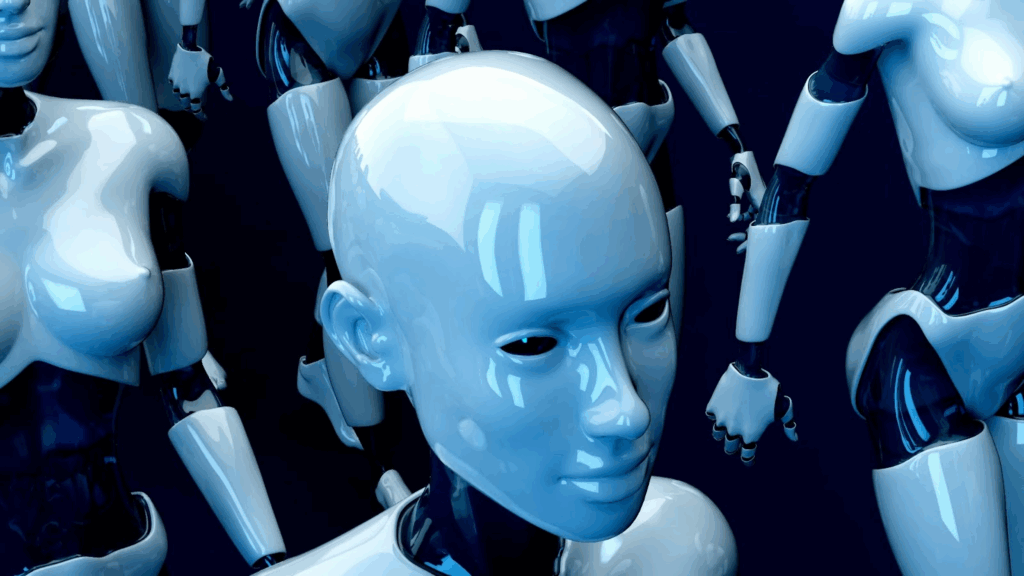
Artificial Intelligence is no longer a distant concept; it is the simulation of human reasoning in advanced learning machines, now embedded in our daily lives. Although AI has been developing for decades, the past few years have marked the beginning of what many refer to as the AI Revolution.
Like the printing press, the industrial revolution, and the rise of the internet, AI is more than a technological milestone. It is also a cultural and ethical turning point, reshaping how we work, create, and even think. Used wisely, AI can become humanity's greatest ally, accelerating processes, automating tedious tasks, and freeing up space for higher creativity. Used carelessly, it risks narrowing our minds, eroding authenticity, and leaving future generations dependent on machines to think for them. The question is no longer if AI will shape our future, but rather how.
The Rise of AI Tools Like ChatGPT
Before ChatGPT, many people thought of AI as something technical and distant, in the background of machines, algorithms, and processes. Then, in 2022, the tipping point arrived with OpenAI's ChatGPT, which completely changed the narrative. For the first time, millions of people could interact with a machine that could answer almost anything, drawing on vast bodies of human knowledge. According to OpenAI, by January 2023, ChatGPT had accumulated over 100 million active users monthly, one of the fastest-growing consumer applications in history.
Why is ChatGPT the loudest of all AI platforms?
Neil Armstrong is remembered before Buzz Aldrin. Not because he was more important, but because he was first. Tesla comes to mind first in EVs, not because it was first to exist, but because it was first to make a lasting impression. People think of ChatGPT first when they think of AI because it was the first to revolutionise mainstream perception.
The common denominator? Human irrationality. We remember the first thing of its kind because of the Primacy Effect, the tendency to remember the first piece of information we encounter better than what comes later. When it comes to AI, we must be aware of the primacy trap: thousands of powerful tools remain overlooked, Spellbook for legal, Qure for medical imaging, Dragon for dictation, Claude, Microsoft Copilot, Adobe Express, eclipsed by OpenAI.
AI in Medicine: Support Tool, Not a Doctor
In healthcare, AI is being implemented for information filtering, research, and quality control. A pulmonary physician can use AI to filter ER CT scans for incidental nodules and flag those that might be cancerous. However, AI cannot replace human judgment, instinct, or responsibility in emergencies. A 2024 PubMed evaluation of ChatGPT on 150 Medscape clinical cases found it answered only around 49% correctly, performance only slightly better than random guessing.
AI in Education
While healthcare is still cautiously testing AI, the education sector has adopted it quickly. For teachers, AI offers significant benefits: drafting curriculum plans, assisting with exam corrections, generating test questions. For students, AI can provide personalised feedback, correct grammar, act as a virtual tutor, or help organise notes. But it is easy to fall into over-reliance. Prompting remains essential, "these are my ideas, formulate them in an outline without writing my report for me", so the machine aids rather than thinks for us.
Virtues and burdens of AI
With AI roaming our world, we can work smarter, not harder, boosting creativity, assisting with problem-solving, analysing data and patterns, even translating across languages in real-time. If misused, however, AI may foster toxic dependency, eroding authenticity, independent thought, and creativity. AI hallucinations, fabricated answers and fake sources, become particularly dangerous in fields like medicine or law. There is also an environmental cost: a single ChatGPT conversation of 20–50 questions can indirectly use the equivalent of 500 ml of water.
The Next Generation's Relationship with AI
Children born today, the "Beta Generation", will grow up completely immersed in AI. Unlike earlier generations who experienced the distinctive shift of the AI revolution, Beta kids will never know a world without it. The challenge lies with parents and teachers: they must teach children how to use AI responsibly. Will AI become their default calculator, their thinking partner, and if so, will they still be able to perform critical thinking exercises independently?
Adaptability: The Constant of Every Revolution
"It is not the strongest of the species that survives, nor the most intelligent. It is the one that is most adaptable to change."
Although the rapid growth of AI can feel overwhelming, we must remain adaptable, just as we did with past revolutions. The notetaker has always been human. The intellectual element, the thinker behind the words, remains irreplaceable. AI is both a tool and a test for humanity's values: used as designed, it can be immensely beneficial; used carelessly, catastrophic. The future of AI is not inevitable; it is intentional. And what we choose will define not just the next era of technology, but the next era of humanity.